“German coffee culture” search results (300)

Coffee short story-German coffee
In 1721, the earliest coffee shop in Germany was born in Berlin. As soon as cafes became popular in Germany, they were restricted by the local authorities. Therefore, compared with other countries, the development of German coffee is relatively simple. It was not until the early 19th century that coffee became one of the best money-making tools at the disposal of Germans. Coffee farming was vigorously developed in Latin America and Central America in the mid-19th century.
2014-08-05 Coffee culture German coffee coffee story
Anecdotes on the Origin of Coffee Culture
Coffee has always been popular in history. Napoleon called coffee an intellectual drink, and it was said that Voltaire, a French philosopher and writer, drank 72 cups of coffee a day. At one time in Turkey, if the husband could not provide coffee for the wife, the wife could divorce her husband. In 1735, the German composer Johann Sebastian Bach completed his coffee chorus.
2014-09-26 Coffee culture coffee anecdotes
On the Strategy of Coffee Operation from the Perspective of Culture
The phenomenon of "homogenization" of urban construction is very serious, no matter where the city is almost the same buildings, the same streets, the loss of its due characteristics.
2014-06-05 Coffee News Cafe Management Coffee Culture
Boutique Coffee Culture, Common sense, Coffee Legend
Coffee has always been popular in history. Napoleon called coffee an intellectual drink, and it was said that Voltaire, a French philosopher and writer, drank 72 cups of coffee a day. At one time in Turkey, if the husband could not provide coffee for the wife, the wife could divorce her husband. In 1735, the German composer Johann Sebastian Bach completed his coffee chorus.
2014-12-08 Boutique coffee culture common sense coffee legends anecdotes history always
Coffee is the inspiration for Beethoven, a German musician.
Coffee is also a source of inspiration for European musicians. German musician Beethoven's three favorite diets were macaroni, cheese and espresso. It is said that he likes to brew coffee by himself and insists on using a few coffee beans for each cup of coffee, 60 beans, no more or less. But 60 beans, weighing about 9 grams (heavy baked beans about 85 grams, light baked about 10 grams), with the normal 150 ml to brew
2015-04-02 coffee culture common sense coffee Germany musician Beethoven composition inspiration source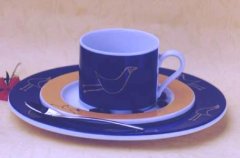
German ROSENTHAL Rosenthal Coffee Cup
Arzberg Town, whose full name is Porzellanfabrik Arzberg, is famous all over the world for its strong design style. The world's first porcelain factory was established in 18-38 and became a global pioneer in porcelain production. Arzberg brand was officially established in 1887 and Arzberg joined Hutschenr-euther AG Group, the largest porcelain tableware maker in Europe in 1972. Durability is the characteristic of Arzberg
2014-07-08 Coffee cups German coffee cups coffee utensils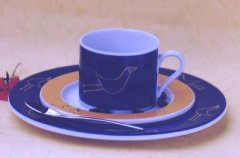
German ROSENTHAL Rosenthal Coffee Cup
Arzberg Town, whose full name is Porzellanfabrik Arzberg, is famous all over the world for its strong design style. The world's first porcelain factory was established in 18-38 and became a global pioneer in porcelain production. Arzberg brand was officially established in 1887 and Arzberg joined Hutschenr-euther AG Group, the largest porcelain tableware maker in Europe in 1972. Durability is the characteristic of Arzberg
2014-07-08 Coffee cups German coffee cups coffee utensils
Historical Chronicle of the basic knowledge of Fine Coffee Culture-3
In 1933, the first automatic coffee extractor was improved; in 1935, a dwarf variant of Bourbon was discovered in Sao Paulo, Brazil, named Kaddura; in 1938, Nestl é developed a modern spray drying method in Brazil; in 1938, the Italian Achille Gaggia invented the pressure rod espresso machine; in 1941, German chemist Schulombom launched the filter cup and bottom.
2015-07-28 Boutique coffee culture basics common sense history chronology 1933 one since
German history: substitute coffee
The "alternative coffee" that has been popular in history, as well as dandelion root, grape seed, lily root, barley flour and so on, is hard for people living in peaceful and affluent areas to imagine.
2014-05-20 Coffee History German History substitute Coffee
Coffee culture where does the trend of drinking coffee come from?
Coffee has always been popular in the history of coffee. Napoleon called coffee an intellectual drink, and it was said that Voltaire, a French philosopher and writer, drank 72 cups of coffee a day. At one time in Turkey, if the husband could not provide coffee for the wife, the wife could divorce her husband. In 1735, the German composer Johann Sebastian Bach finished his coffee chorus.
2015-02-07 Coffee culture coffee the wind from where the rise history has been
The Cultural basis of Coffee the Origin of the name COFFEE
The word Coffee means friendly in Arab countries. According to the legend, there are many sources of coffee names, and there are two more credible ones: the evolution of the phonetic era: Coffee is English, French is Cafe, Italian Caffe, Dutch Koffie, German Kaffee. The pronunciation comes from the Arabic word Qahwah, which means plant drink, and the Turkish word for kahveh.
2015-01-04 Coffee culture basics common sense COFFEE name origin Coffe
Introduction to the characteristics of high-quality coffee Rwanda coffee flavor and taste manor area
The Tutsi established a feudal kingdom in Rwanda in the 16th century. Since the middle of the 19th century, British, German and Belgian forces invaded one after another. It was reduced to a German preserve in East Africa in 1890. It was occupied by Belgium in 1916. In 1922, according to the Treaty of Versailles, the League of Nations entrusted Lu to Belgian rule and became part of the country belonging to Luanda-Ulondi. It became a United Nations trustee in 1946. Still ruled by Belgium.
2016-08-23 Boutique coffee Rwanda flavor taste manor producing area characteristics introduction 16
German ROSENTHAL Rosenthal Coffee Cup
Arzberg Town, whose full name is Porzellanfabrik Arzberg, is famous all over the world for its strong design style. The world's first porcelain factory was established in 18-38 and became a global pioneer in porcelain production. Arzberg brand was officially established in 1887 and Arzberg joined Hutschenr-euther AG Group, the largest porcelain tableware maker in Europe in 1972. Durability is the characteristic of Arzberg
2015-07-20 Germany ROSENTHAL Rosen Coffee Cup Arzberg full name
German history: substitute coffee
Today, Germany is one of the countries that import the most coffee in the world. More than 1/4 of Vietnam's annual coffee exports are sent to Germany. But when it comes to Germany, we only think of sausages and beer, not coffee. This is because, in the 17th century, when coffee spread across Europe, Germany had few overseas colonies, unlike Britain and France.
2016-09-28 Germany history substitute coffee today the world imports more
Common sense of Coffee Bean Culture Guatemala Antigua Flower God Coffee Culture
Coffee was really introduced into Guatemala in 1750 by Father Jesuit, where the coffee industry was developed by German colonists at the end of the 19th century. Today, most of the coffee industry's production takes place in the south of the country. Guatemala has seven main coffee producing areas: Antigua (Antigua), Cobain (Coban), Lake Attilan (Atitlan), Vevetnango (Huehuetenango)
2014-12-15 Coffee beans culture common sense Guatemala Antioch flower god coffee culture coffee truth
Boutique coffee German "substitute coffee"
Today, Germany is one of the countries that import the most coffee in the world. More than 1/4 of Vietnam's annual coffee exports are sent to Germany. But when it comes to Germany, we only think of sausages and beer, not coffee. This is because, in the 17th century, when coffee spread across Europe, Germany had few overseas colonies, unlike Britain and France.
2015-01-21 Boutique coffee Germany human substitute coffee today the world import
Basic knowledge of Coffee Culture Guatemala Antigua Flower God Coffee Culture
Coffee was really introduced into Guatemala in 1750 by Father Jesuit, where the coffee industry was developed by German colonists at the end of the 19th century. Today, most of the coffee industry's production takes place in the south of the country. Guatemala has seven main coffee producing areas: Antigua (Antigua), Cobain (Coban), Lake Attilan (Atitlan), Vevetnango (Huehuetenango)
2015-05-08 Coffee Culture fundamentals Common sense Guatemala Antioch Flower God Coffee Real introduction
General knowledge of Coffee Culture Guatemala Antigua Flower God Coffee Culture
Coffee was really introduced into Guatemala in 1750 by Father Jesuit, where the coffee industry was developed by German colonists at the end of the 19th century. Today, most of the coffee industry's production takes place in the south of the country. Guatemala has seven main coffee producing areas: Antigua (Antigua), Cobain (Coban), Lake Attilan (Atitlan), Vevetnango (Huehuetenango)
2015-01-31 Coffee Culture Common sense Guatemala Antioch Flower God Coffee Real imported dangerous Land
Understanding the World Coffee Culture-the Legend of the Pope and Coffee
From the end of the 15th century to the early 16th century, coffee had become popular in the central tropical regions. at that time, ambassadors and merchants of the Turkish emperors thought that coffee was a healthy product with special effects. Leonhard Rauwolf, a famous German botanist and botanist, wrote a book on coffee in 1582, but it was not until 1615 that coffee beans were imported from Venice.
2015-11-26 Understand the world coffee culture Rome pope coffee legend AD 15th
Coffee Common sense German History of "substitute Coffee"
Today, Germany is one of the countries that import the most coffee in the world. More than 1/4 of Vietnam's annual coffee exports are sent to Germany. But when it comes to Germany, we only think of sausages and beer, not coffee. This is because, in the 17th century, when coffee spread across Europe, Germany had few overseas colonies, unlike Britain and France.
2014-12-05 Coffee Common sense Germany Human substitute Coffee History Today the World